
Six Guidelines for a Respectful Visit
-

1. Take Your Trash Home
Do not leave behind any trash, including small scraps of paper, food, plastic bottles, or cigarette butts. Some areas have no trash cans available. Please make sure to take all of your trash home with you.
-

2. Keep Noise Levels Down
Shrines are places of prayer, and local residents live in the neighborhoods around the World Heritage sites. Please keep your voice down at shrines and in residential areas, and do not play music through speakers.
-

3. Stay on Designated Paths
Do not stray from walking paths or shrine approach routes, and never cross fences or ropes. Entering off-limits areas damages cultural properties and nature, and can cause accidents.
-

4. Protect Cultural Assets and Nature
Do not touch or climb on buildings, stone monuments, Buddhist statues, or sacred trees. Taking home stones, lava, plants, or other natural elements as souvenirs is strictly prohibited.
-

5. Be Mindful When Taking Photos
Do not photograph worshippers or local residents without their permission. Always show courtesy and consideration to those around you when taking photos.
-

6. Do Not Block Pathways
Do not block approach paths, stairways, or walkways for extended periods when taking pictures or moving in groups. In crowded spots, share the space and be courteous to others.
Visiting Shrines
Shrines are sacred sites where Japanese deities are enshrined. Visitors of any religious background are welcome. Worship is not mandatory, but please behave quietly and respectfully.
-
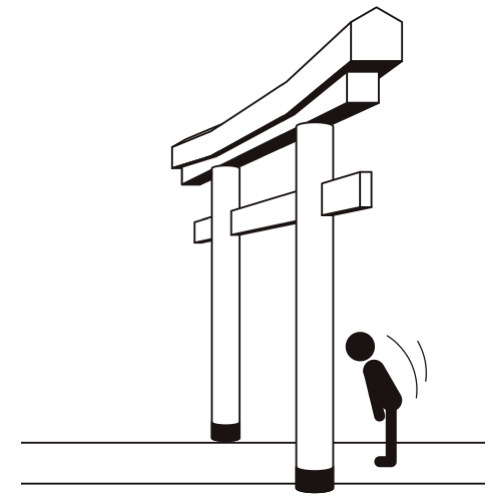
Bowing Before the Torii Gate
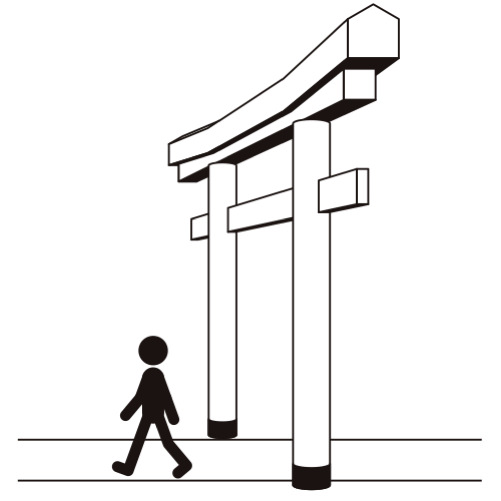
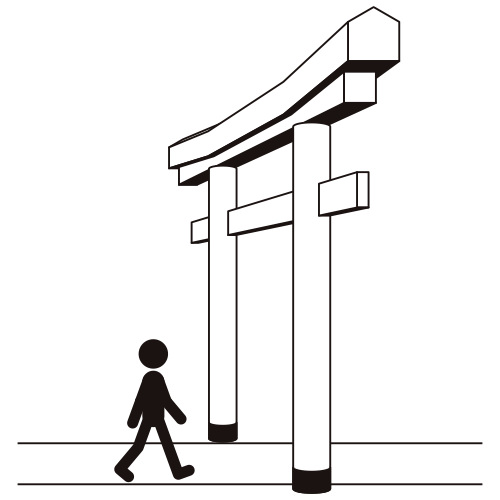
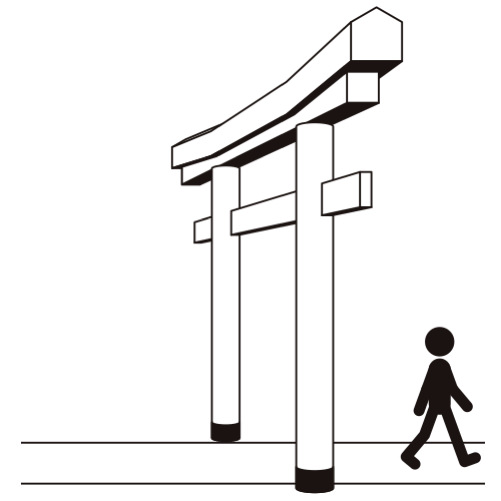
A torii gate marks the boundary between the everyday world and sacred ground. Stop before passing through the gate and bow lightly.
The center of the approach path (sando) is considered the pathway for the deities. Please walk along the left or right side rather than the center.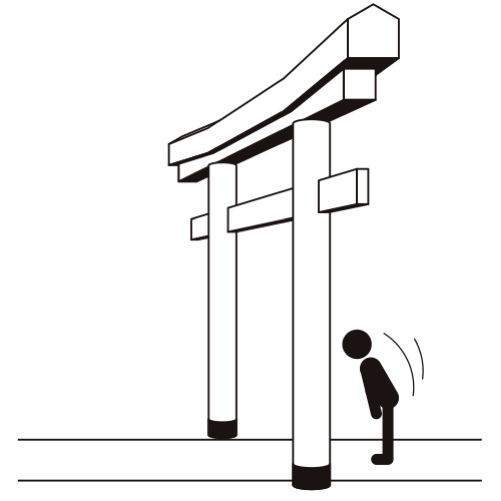
-
Purifying Your Hands and Mouth at the Temizuya
Purify your hands and mouth at the water pavilion (temizuya) before praying:
1. Hold the ladle with your right hand and wash your left hand.
2. Switch the ladle to your left hand and wash your right hand.
3. Hold the ladle with your right hand and pour water into your left palm to rinse your mouth. Never put the ladle directly to your mouth.
4. Finally, tilt the ladle upright so the remaining water flows down to clean the handle.*If the temizuya is unavailable, you may proceed directly to pray.





-
Praying at the Main Hall (Haiden)
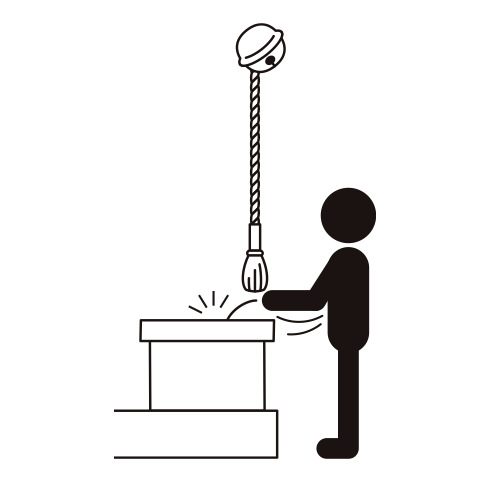
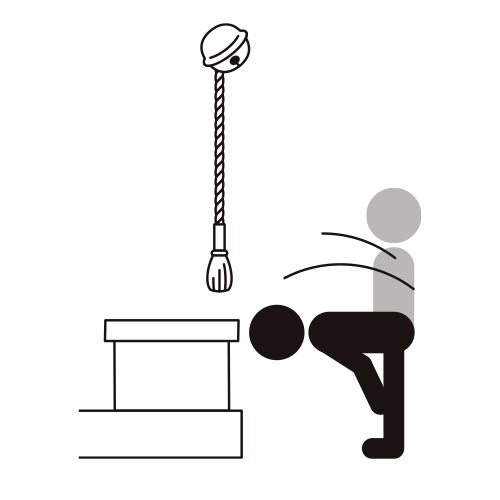
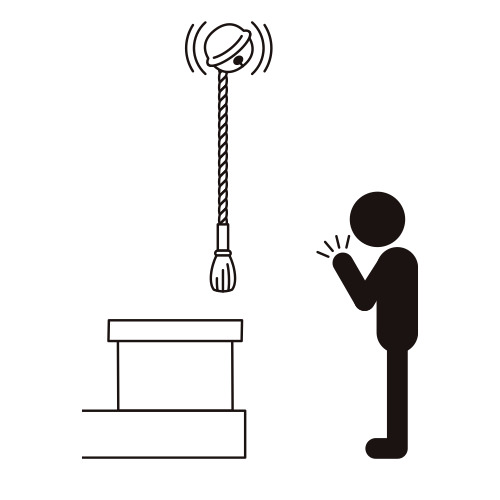
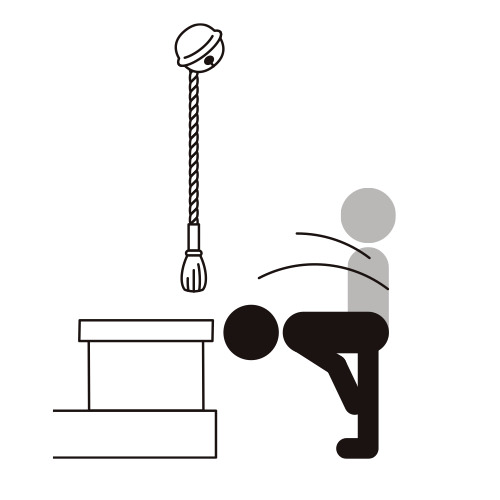
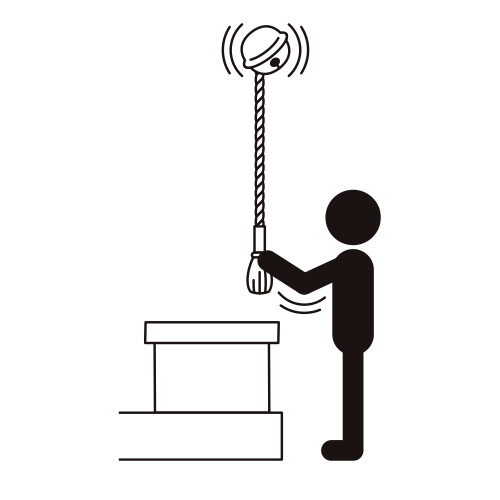
The standard prayer etiquette at shrines is 'Two bows, two claps, one bow':
1. Gently place your offering in the offering box.
2. Bow deeply twice.
3. Clap your hands twice in front of your chest.
4. Join your hands together and offer a silent prayer.
5. Bow deeply once more.*If specific local instructions are posted at the site, please follow them.
-
When Leaving Through the Torii Gate
After exiting through the torii gate, turn back toward the main hall and give a final light bow.
Photography Etiquette at Shrines
Photography policies vary depending on the shrine or cultural property:
- - Photography inside main halls or interior structures may be prohibited.
- - Do not photograph worshippers or local residents without permission.
- - Do not block pathways with tripods or selfie sticks.
- - Follow the instructions of staff during rituals or festivals.
- - Never cross fences or move cultural artifacts to take photos.
- - Drone flying and commercial photography require prior approval and permits.
Consideration for Nature and Local Residents
Surrounding these World Heritage sites are not only beautiful landscapes but also the daily lives of local communities. Please show respect beyond the tourist areas.
- Do not enter private property (residences, farmland, pastures).
- Avoid street parking or unauthorized use of private store parking lots.
- Be especially quiet early in the morning and late at night.
- Do not touch or feed wild animals.
- Do not gather stones, lava, or plants.
- Do not smoke or use open flames outside designated areas.
- Keep public restrooms and rest areas clean.
- Park bicycles in designated spaces and do not block pedestrian traffic.
Site-Specific Rules & Guidelines
-
Fujisan Hongu Sengen Taisha
Keep quiet within the grounds and respect worshippers and sacred ceremonies during photography. Do not touch main structures, sacred trees, or cultural artifacts, and do not pollute Wakutama Pond or other water features within the grounds.
-
Yamamiya Sengen Shrine
The Yohaijo (worship place from afar) is a sacred location for worshipping Mt. Fuji itself. Do not step inside the fence surrounding the Yohaijo, and do not move the stone alignments used in ancient rituals.
-
Murayama Sengen Shrine
This shrine preserves the history of Shugendo (mountain asceticism) on Mt. Fuji. Please do not touch historical buildings, Buddhist statues, stone monuments, or sacred trees, and observe quietly during rituals.
-
Hitoana Fuji-ko Ruins
Reservations can be made for cave entry. Do not enter the cave without permission or cross fences/ropes. Refrain from touching, climbing, or placing items on stone monuments.
-
Shiraito Falls
Stay on designated walking paths and do not enter the waterfall basin or river. Never climb over safety railings or take photos in hazardous areas. Note that stairs and pathways become slippery on rainy days.
-
Mt. Fuji & Climbing Routes
Stay on marked trails and take all your trash with you. Do not collect or take away stones, lava, or plants. Before climbing, check the latest information regarding weather, open seasons, and trail restrictions.
Weather & Safety Guidelines
Weather conditions around mountains and waterfalls can change rapidly.
- Do not take unnecessary risks when sightseeing or climbing during heavy rain, typhoons, thunderstorms, or snowy conditions.
- Stairs, cobblestones, and footpaths become extremely slippery when wet.
- Watch for snow accumulation and frozen road conditions in winter.
- Wear comfortable walking shoes with good traction.
- Always follow 'No Entry' and road closure signs.
- If climbing Mt. Fuji, check official weather forecasts and trail regulations in advance.
Frequently Asked Questions (FAQ)
-
Q: Can I enter a shrine even if I am not religious?
A: Yes, everyone is welcome. Worship is optional; you may simply enjoy a quiet walkthrough.
-
Q: Can I take photos or videos?
A: Generally yes, but please obtain permission before photographing individual worshippers or local residents.
-
Q: Can I fly a drone?
A: Drones require prior inquiry and official permission. Do not fly drones without explicit authorization from site administrators.
-
Q: Are the sites accessible with strollers or wheelchairs?
A: Accessibility varies by site due to steps, stairs, or unpaved paths. At Shiraito Falls, the observation area before the stairs is accessible, but reaching the waterfall basin requires navigating about 100 stairs.
-
Q: Can I visit on rainy or snowy days?
A: Some sites can be visited, but walkways and stairs may be slippery. Do not take unnecessary risks during heavy rain, snow accumulation, or icy conditions, and check the latest information.
-
Q: Are the sites suitable for children and senior citizens?
A: Some areas involve steep stairs or rough terrain. Please check weather and health conditions and visit at a comfortable pace.
-
Q: Are trash cans and restrooms available?
A: Facilities differ by location. Where trash cans are not provided, please carry your trash home. Check facility amenities before setting out.
-
Q: Can I visit with pets?
A: Rules vary by location. Keep pets on a leash, and do not bring them inside buildings or restricted areas. Confirm rules with each site beforehand.
-
Q: Is Mt. Fuji open for climbing year-round?
A: Mt. Fuji is open for climbing only during the official summer climbing season. Off-season climbing is extremely dangerous. Always check official Mt. Fuji climbing websites.
-
Q: What should I do in case of injury or sudden illness?
A: In an emergency, contact:
- Emergency / Fire: 119
- Police: 110
Provide your exact location, condition, and any nearby landmarks as clearly as possible.